When both sides pray to win, whose prayer does God answer?
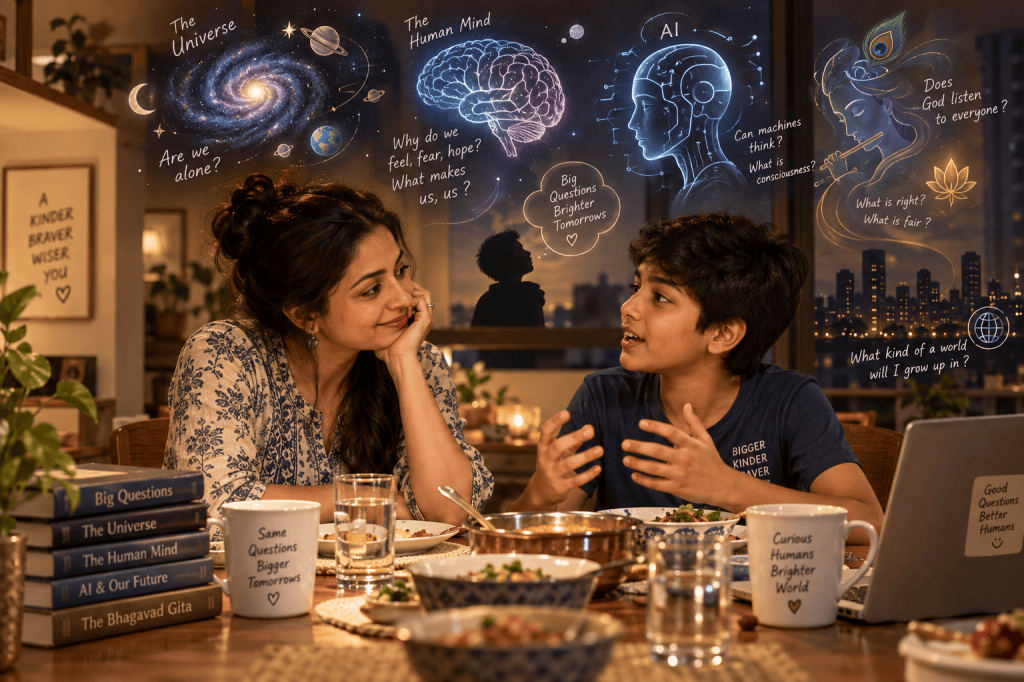
Lately, I have been struggling to answer some very poignant questions from my very own child. My 12-year-old is sometimes very deep and philosophical, and I’m all for it, except that he wants me to know all the answers to the questions he has in his mind. Obviously, like children all over the world (before they hit teenage years), he thinks that parents are super intelligent know-it-alls! Trust me, it is very flattering, and I truly love being called a smart aiyya (as my sonny boy calls me), but you and I both know that there’s not nearly half as much grey matter in my brain to warrant this very generous praise and adulation.
And yes, of course, as he renders me speechless with every question that he hits out of the park, he seeks immediate answers that usually open up a Pandora’s box of the universe, its mysteries, and the many paradoxes of the human mind.
However, as my very wise late papa had once told me, the universe always listens. So if you have a question and say it aloud, you will find the answer – his own version of Ask and you shall receive (an answer)!
And as often as it happens, I found evidential proof to my papa’s theory once again. My son asked me the other day:
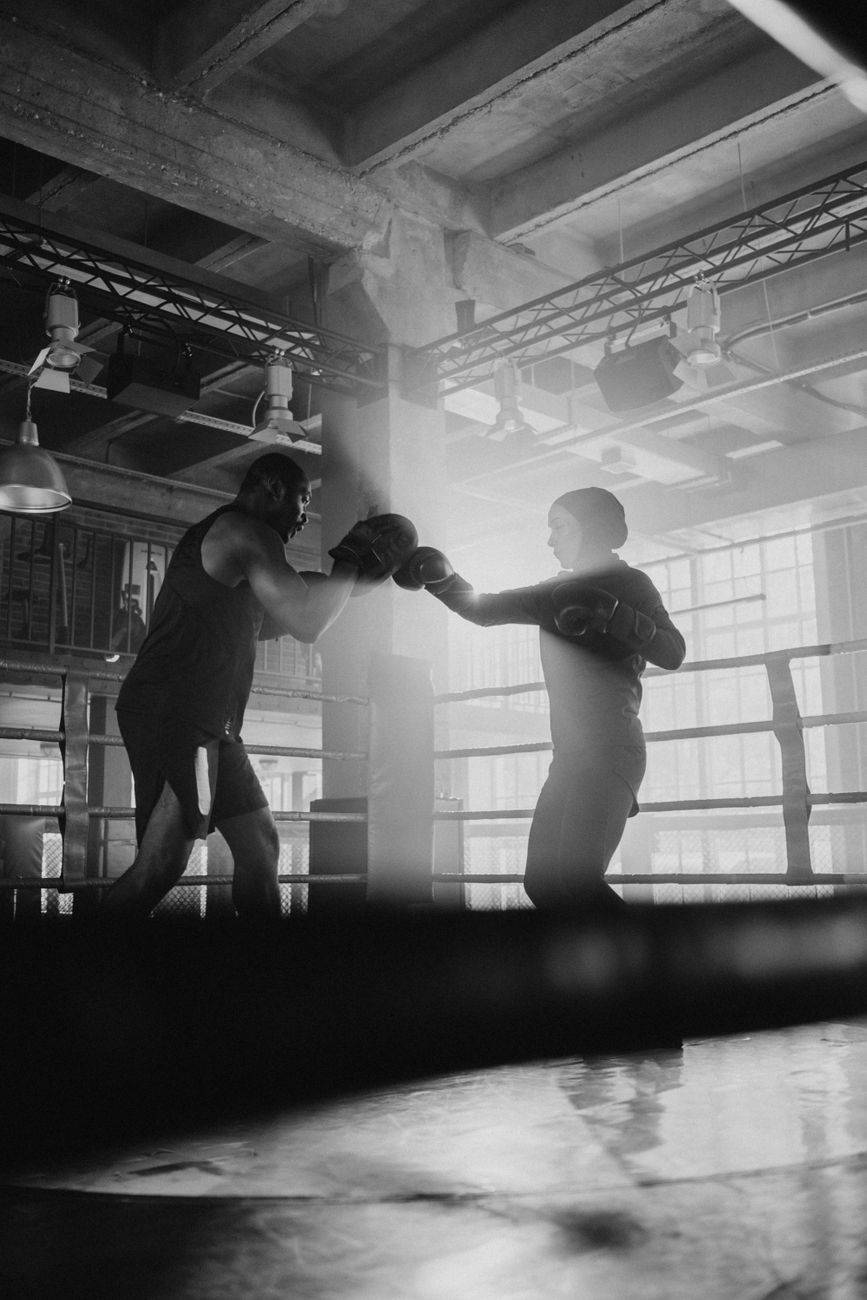
If two people are boxing in a match and both of them are asking God to help them, is God going to listen to both of them? In this case, who will God help win? Does he play favorites?
To be honest, I wanted to give a simple answer: whoever plays better that day will win.
All my life, I genuinely believed things like Fortune favors the brave and God helps those who help themselves. Yet, the world we live in is hardly fair, hardly idealistic, and definitely not playing by the rules we were taught to follow to be good human beings. We live in a world where favoritism, corruption, crime, abuse, and violence are so rampant that sometimes I wonder if we common law-abiding citizens have become immune to the amount of bad news we read and watch daily.
How does one prepare a child who is going out into a world where even children are not safe from each other, and bullying and groupism can cause suicides? How do you tell him that if you work hard, you get rewarded with more work while sycophants get promoted? How do I explain that, according to UNICEF’s State of the World’s Children 2025 report, more than 417 million children in low- and middle-income countries are severely deprived of at least two vital basic needs, such as nutrition, water, sanitation, health, housing, and education?
This depressed me for at least two days (and I apologize if I did that to you too), until I found myself praying on Janmashtami.
As we celebrated Krishna, I was suddenly reminded of the circumstances of his birth.
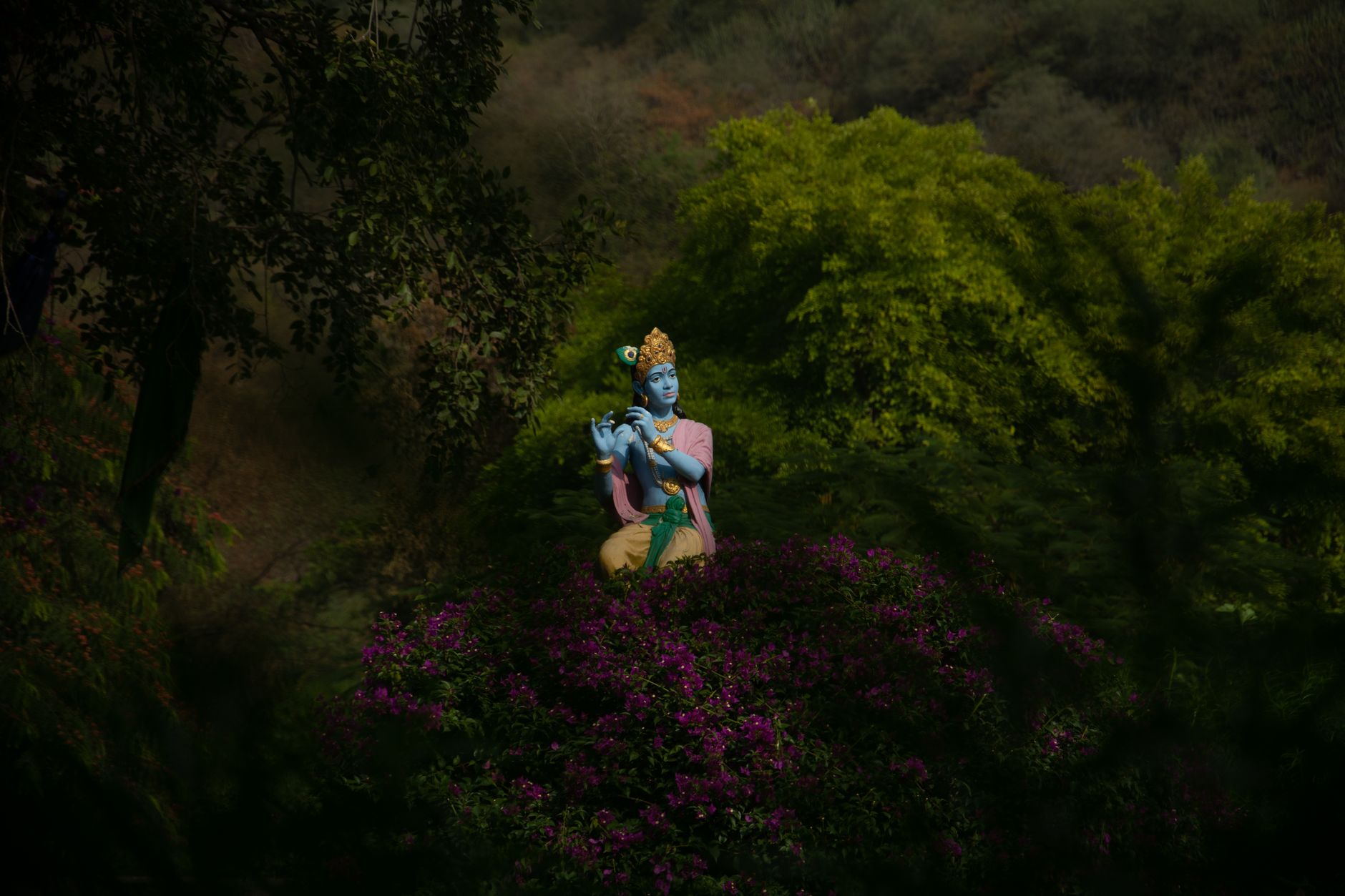
Lord Krishna was born in a prison. His parents, Devaki and Vasudeva, were imprisoned by his own maternal uncle, Kansa, who was waiting for his birth so that he could kill him. His older siblings had already been killed. To save his life, the newborn Krishna had to be carried away from his birth parents and raised by Yashoda and Nanda in Gokul.
And safety did not necessarily follow.
Even as a child, Krishna’s stories are filled with danger—Putana, Trinavarta, Kaliya, Aghasura, and the many threats sent by Kansa to destroy him. Later came separation from the home and people he loved, the responsibilities of leadership, political intrigue, war, difficult moral choices, and eventually Kurukshetra.
Yes, we can argue that Krishna was an avatar of Vishnu and therefore uniquely equipped for everything life threw at him.
But perhaps that isn’t the point.
Because stripped of the divinity for just a moment, there is something deeply human in the story: even God, when he chose to live a human life, did not choose an easy one.
And that thought stayed with me.
Perhaps I have been asking the wrong question.
Perhaps the question isn’t, “If both boxers pray, whom will God help win?”
Perhaps it is, “What does God’s help actually look like?”
Maybe God Doesn’t Choose the Boxer
All these years, somewhere in my understanding of faith was a quiet transaction: be good, work hard, do the right thing, pray—and somehow things will work out.
But life doesn’t make that promise.
Good people lose.
Hardworking people get overlooked.
Honest people are sometimes cheated.
Children suffer circumstances they did absolutely nothing to deserve.
And sometimes the person who did everything “right” still loses the proverbial boxing match.
Interestingly, the Bhagavad Gita never promises Arjuna that life will be fair. Krishna doesn’t magically remove the battlefield either. He doesn’t tell Arjuna, “You prayed to me, so don’t worry. I will fight this battle for you.”
Instead, he prepares him to face it.
And therein lies the first answer I can give my son.
1. Do What Is Yours to Do
One of the most enduring teachings of the Gita is Nishkama Karma—act without attachment to the outcome.
We often reduce this to “don’t worry about results,” but I think it asks something much harder of us.
Give the fight everything you have. Train. Prepare. Show up. Act according to your values. Do what is right even when doing what is right does not guarantee that you will win.
Because effort is yours. Integrity is yours. The outcome isn’t entirely yours.
So perhaps if two boxers pray to God before entering the ring, God doesn’t owe either of them a victory. Their responsibility is to fight the best fight they can.
2. Your Battle Is Yours
Swadharma (walking your own path)—another difficult lesson to teach a child growing up in a world of rankings, marks, trophies, social media, popularity, and constant comparison. The importance of living according to one’s own duty and nature rather than imitating somebody else’s path.
Someone will always run faster. Someone will have more. Someone less deserving may occasionally get the opportunity you wanted. Someone may even break every rule you followed and still appear to win. But another person’s victory does not determine the worth of your journey.
Our job is not to raise children obsessed with winning every comparison, but children secure enough to know which battles are theirs to fight and what kind of person they want to be while fighting them.
3. The Mind Is a Battlefield Too
Kurukshetra wasn’t merely a physical battlefield. Arjuna’s greatest battle began before the first arrow was released.
He was afraid. Confused. Grieving. Doubting himself. He wanted to walk away. And Krishna’s conversation with him begins there.
That feels remarkably relevant today.
I cannot remove every bully from my child’s path. I cannot guarantee that every teacher, friend, colleague, boss, or institution he encounters will be fair. I cannot promise him that hard work will always be rewarded immediately or that kindness will always be reciprocated.
What I can help him build is the inner strength to meet those moments without allowing them to decide who he becomes.
Perhaps that is one of the greatest forms of protection we can give our children—not a world without adversity, because such a world does not exist, but an inner compass strong enough to navigate one that is imperfect.
4. Doubt, but Don’t Let Doubt Paralyze You
The Gita also speaks about doubt and faith.
I don’t think faith has to mean never questioning. If anything, Arjuna spends much of his conversation with Krishna questioning, challenging, and trying to understand.
Perhaps faith is what remains after the questions. Faith that one disappointment isn’t the end of your story. Faith that losing doesn’t make you a loser. Faith that goodness still has value even when it isn’t immediately rewarded.
Faith that you can begin again.
And perhaps, most importantly, faith that there is meaning in doing the right thing even when nobody is applauding.
5. Winning Isn’t Always the Victory
And this finally brought me back to my son’s boxing match.
Suppose both boxers pray. One wins. One loses. Was God listening only to the winner? I don’t think so anymore.
Maybe one needed the confidence that came from winning.
Maybe the other needed to discover that he could lose and still get up the next morning.
Maybe one learned discipline.
Maybe the other learned humility.
Maybe both walked out of that ring stronger than they entered it.
Or maybe—and this is equally important—there is no neat cosmic explanation for that particular result at all. One simply boxed better that day.
Faith does not require us to manufacture meaning for every disappointment.
Sometimes a boxing match is just a boxing match.
So, Does God Play Favorites?
I finally have an answer for my son.
I don’t know. And strangely, I am becoming comfortable saying that.
I don’t know why some children are born into abundance while millions of others struggle for food, clean water, healthcare, shelter, and education. I don’t know why good people sometimes suffer, and people who hurt others sometimes prosper. I don’t know why every sincere prayer isn’t answered in the way it was prayed.
And perhaps raising a thoughtful child does not require me to pretend that I do.
But I can tell him what I have come to believe.
Maybe God doesn’t always decide who wins the boxing match. Maybe God is the courage that gets you into the ring. The discipline that makes you train when nobody is watching. The conscience that stops you from hitting below the belt even when you could get away with it. The humility with which you accept victory. The resilience with which you survive defeat. And the strength to lace up your gloves again when life calls you back into the ring.
Krishna never promised Arjuna a life without battles. He gave him the wisdom with which to face them. That may be what I should be asking for my child too.
Not that he should never encounter a rakshasa. God knows, every generation has its own. But that when he does, he knows who he is.
That he knows what he stands for.
That he has the courage to fight when he must, the wisdom to walk away when he should, and the grace to understand that winning is not always proof of righteousness, and losing is never proof that God wasn’t listening.
And maybe someday, when my son stops believing that his smart aiyya knows everything, this is one answer I hope he remembers.
 Mizuki Dreams
Leave a comment